
Most practice owners think of their website homepage as the front door. You paid for the design, chose the photos, wrote the welcome message. It feels like the place new clients meet you.
For most new clients, it isn’t. The first place they meet you is a search results page — usually a map with three practices on it — after typing something like “massage near me,” “chiropractor near me open now,” or “facial near me.” By the time anyone sees your homepage, they’ve often already decided whether you’re worth a look.
This post explains how “near me” searches actually work, why they matter so much for bodywork practices, and what to focus on instead of endlessly tweaking your homepage. It supports our guide to local marketing for massage and bodywork therapists.
What happens when someone searches “massage near me”
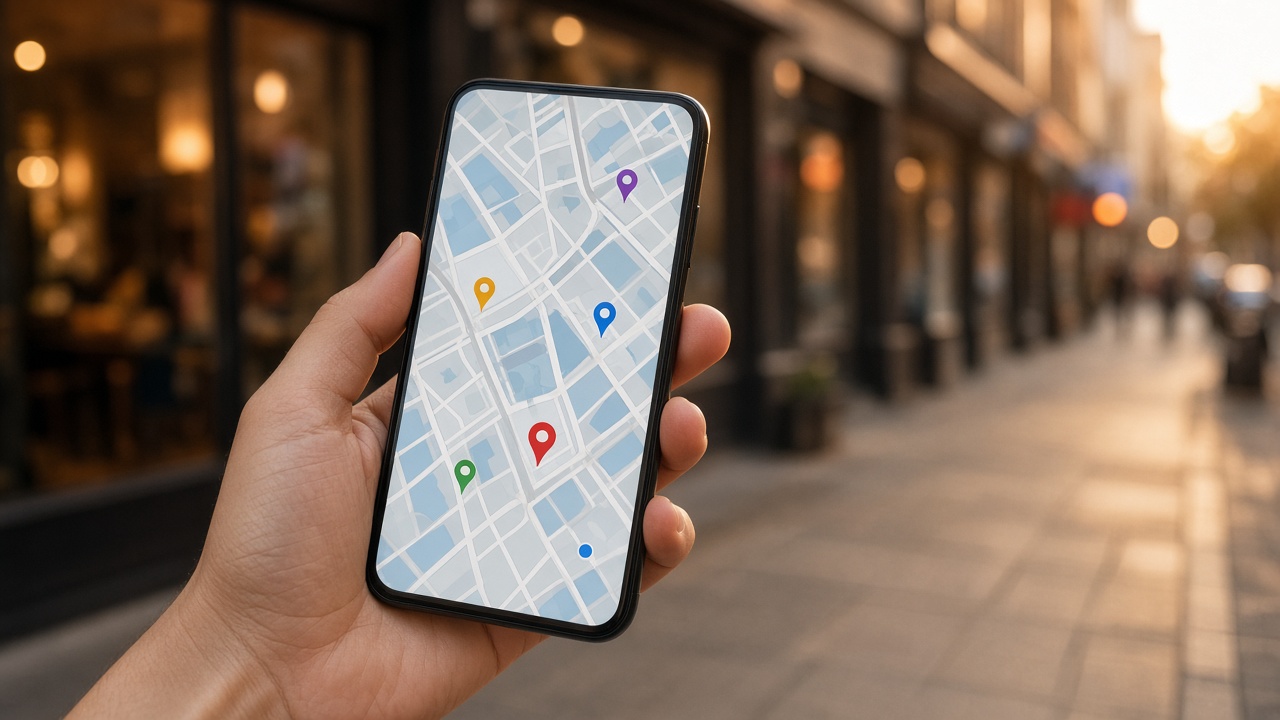
When someone searches with local intent, Google typically shows a map with a short list of businesses — the “local pack” — above or among the regular website results. Each listing shows your name, rating, review count, category, hours, and often a photo. On a phone, buttons to call, get directions, or visit the website are one tap away.
Notice what’s not in that list: your homepage design, your tagline, your carefully written About page.
Plenty of people decide right there. They see four-point-eight stars, “Open until 8 PM,” and a photo of a calm treatment room, and they tap Call. Others click into your Google Business Profile to read reviews and look at more photos. Only some click through to your website, and when they do, they often land on a specific service page rather than your homepage.
Why bodywork searches are especially local
Massage, chiropractic, PT, and skincare are services people need to physically travel to (or have come to them). Nobody books a 60-minute massage 45 minutes away when there’s a good option ten minutes away. That makes distance and convenience part of almost every decision.
It also means many searches don’t even include “near me.” Google infers local intent from searches like “deep tissue massage” or “sports chiropractor” and shows map results anyway, based on the searcher’s location.
Practically, this means:
- Your profile is competing with the handful of practices closest to the searcher, not with every practice in the city.
- Small details — “Open Sunday,” “Wheelchair accessible,” “Online appointments” — can decide who gets the call.
- Reviews and photos do much of the persuading before your website gets a chance.
What decides who shows up
Google says local results are based mainly on relevance, distance, and prominence. You can’t move your building, but you can influence the other two:
- Relevance: accurate primary and secondary categories, a full services list, and a clear description that says what you do. Our GBP categories guide walks through the choices for massage and chiropractic.
- Prominence: a steady flow of genuine reviews, thoughtful replies, consistent business information around the web, and a website with real content about your services.
No one can promise you a top-three spot. A practice two blocks closer to the searcher will sometimes appear first no matter what. But a complete, active profile gives you a much better chance across the many searches happening around you every day.
Your website still matters — just differently
This isn’t an argument to ignore your website. It’s an argument to stop treating the homepage as the main event.
Your website does three jobs in local search:
- It supports your profile’s relevance. Google reads your site to understand what you offer. A page dedicated to prenatal massage makes it more likely you’ll appear for prenatal searches.
- It closes the decision for careful researchers. Someone with a back injury or a first-time massage client may want to read about what a session involves, your credentials, and your policies.
- It’s where booking often happens. If the path from profile to booking is clumsy, you lose people who were ready to book.
So the pages that matter most are often your service pages, your booking page, and a clear contact/location page — not the homepage hero image. We’ll cover this in our upcoming website content and local SEO guide (coming soon).
A practical example
Picture two massage studios a mile apart.
Studio A has a beautiful website with a video background. Its Google profile lists one category, “Massage spa,” three photos from 2019, hours that haven’t been updated for the new Saturday schedule, and 14 reviews — the newest from last year.
Studio B has a simple website with one page per service. Its profile has an accurate primary category, a full services list, recent photos of each room and therapist, current holiday hours, and 60 reviews with a few new ones each month, each with a short reply.
A runner searches “sports massage” on Saturday morning. Studio B appears with “Open now” and a recent review that mentions post-race recovery. Studio A appears as “Closed” because its hours are wrong. The runner never sees Studio A’s video.
Where to put your time instead
If you have an hour this week for marketing, here’s how we’d split it:
- 15 minutes — audit your Google Business Profile. Check categories, hours (including upcoming holidays), services, and photos. Our GBP optimization guide has the full checklist.
- 15 minutes — reviews. Reply to any unanswered reviews, and set up a simple way to ask at checkout. See how to ask for reviews without sounding awkward.
- 15 minutes — photos. Take five new, well-lit photos of your space and team. See GBP photos that convert.
- 15 minutes — check the path to booking. On your phone, search for your practice, tap through to your site, and try to book. Fix anything that slows you down.
None of these involve redesigning your homepage.
Common misconceptions
“If my website ranks, I’ll get found.” For local services, the map often appears before website results. Ranking your site helps, but the profile is usually seen first.
“Adding ‘near me’ to my website will help.” Writing “massage near me” on your pages reads awkwardly and doesn’t do what owners hope. Google already knows where you are. Mention your actual neighborhood, city, and landmarks naturally instead.
“I have good reviews, so I’m fine.” Recency matters to people. A 4.9 rating with no reviews in a year can look like a practice that’s slowed down or closed.
“Once it’s set up, it’s done.” Hours change, services change, Google accepts public edits. Profiles need light, regular attention.
The takeaway
Your homepage isn’t useless — it’s just not where most first impressions happen anymore. For bodywork practices, the decision often begins and sometimes ends on a map listing. Make that listing accurate, complete, and active, make sure your site backs it up with clear service information, and make booking easy.
For the full picture of how your profile, reviews, website, and routine fit together, start with our local marketing guide for massage and bodywork therapists. For a sustainable rhythm, use the weekly marketing checklist for solo therapists.
